
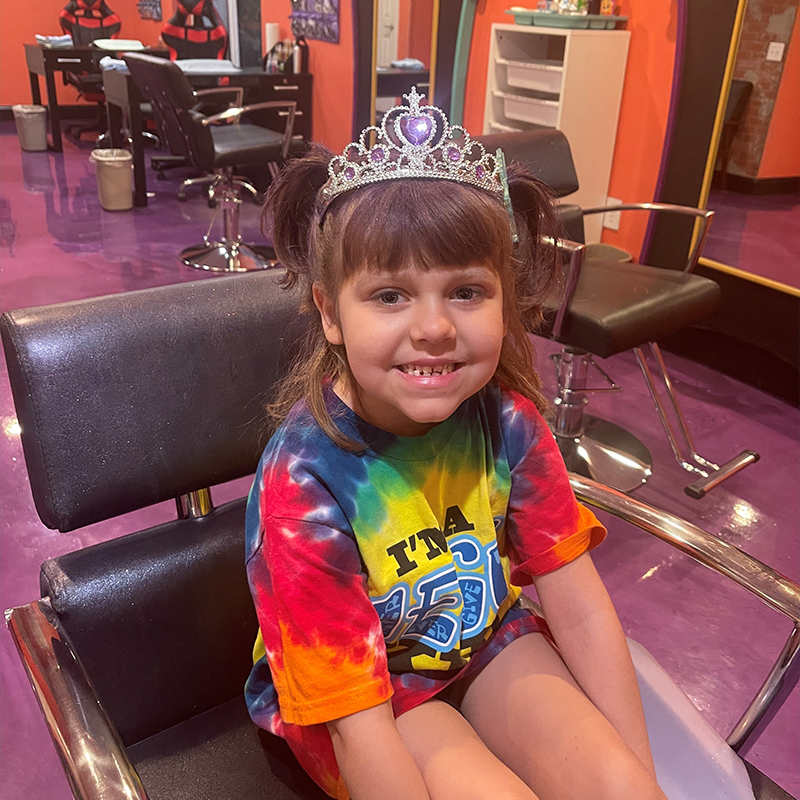
When Cambrie Thomas was diagnosed with Acute Lymphoblastic Leukemia (ALL) at the age of three, her mother Crissy felt isolated and alone. Although she was surrounded by a large family that offered tremendous support, she didn’t have anyone to connect with that could understand what dealing with a pediatric cancer diagnosis was really like.
“My family was great, but at the end of the day, they didn’t know how I was feeling,” said Crissy. My mom phrased it the best when she told me it was hurting her not only because it was her grandchild going through treatment, but also because I’m her child and she felt like she couldn’t do anything to help either of us.”
It was also the height of the COVID-19 pandemic at the time of Cambrie’s diagnosis which only amplified Crissy’s feeling of isolation. She was fortunate to make friends with other parents navigating pediatric cancer at UVA Children’s Hospital during Cambrie’s treatment, but she longed for a more consistent program that supported parents of children fighting cancer.

“Being able to talk to parents of survivors would have helped me look forward to the light at the end of the journey and would have shown me that not every ending is bad,” said Crissy. “When you are going through the process, you see more on social media about the bad endings and recurrences than you do the success stories. I needed the hopeful survivor stories.”
An Inspiring Outcome
According to Crissy, Cambrie kept a smile on her face throughout her entire two- and half-year treatment journey and today, she is thriving! Currently in second grade, Cambrie has a wonderful circle of friends and is doing great in school. The experience has changed the perspective of the entire Thomas family.
“We now live life to the fullest because we know that at any moment your world can be thrown upside down,” said Crissy. “We take advantage of vacations, and we find any moment we can to go on an adventure or create lasting memories.”

During Cambrie’s cancer journey, Crissy set aside her aspirations of getting her Elementary Education degree and recognizes now that it just wasn’t her time to pursue that goal. This past November, she achieved her dream and received her degree from Grand Canyon University. Crissy just finished applying for her teaching license and will be working in Cambrie’s primary school.
Giving Back Through Peer Mentorship
Grateful for Cambrie’s incredible outcome, Crissy wanted to be able to give back, but struggled to find a way that felt like a fit until she discovered Cancer Hope Network’s Hopeful Hearts program on Facebook. She immediately signed up to become a volunteer Peer Mentor and completed mentor training to begin helping other parents experiencing a pediatric cancer diagnosis.
“Hopeful Hearts shows parents that they are not alone,” said Crissy. “It helps them recognize there are a lot of people who have walked in their shoes and can understand how they are feeling. It also gives them hope for a positive outcome.”
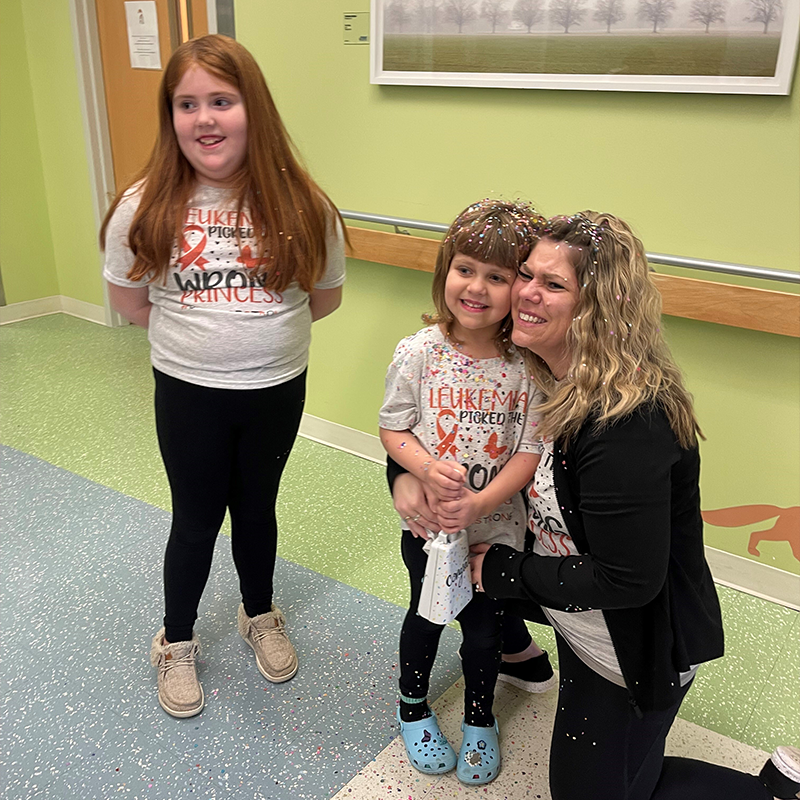
Crissy feels like the most important trait she possesses as a volunteer peer mentor is empathy. Her phone calls with mentees often last over an hour and although mentees sometimes ask her questions, she mostly gives them the floor to talk about their concerns and challenges. Her number one piece of advice to any parent navigating pediatric cancer is to take it minute by minute. “It doesn’t have to be a sprint or a marathon,” says Crissy. “It’s also ok to take time for yourself and to take care of yourself through the journey.”
If you are the parent of a pediatric cancer survivor one year post treatment and would like to volunteer like Crissy to be a peer mentor, or if your child is currently facing cancer and you would like to connect with someone who has been there, visit https://cancerhopenetwork.org/hopeful-hearts/.
