

At 23, Michaela Baer was optimistic about her future. She was working as a nanny and finishing her undergraduate degree in Vancouver, Canada. Then one day she started getting random intense neck pain. She believed it could be because she had been carrying around a young child who loved to ride on her shoulders.
Concerned by the persistent pain, Michaela decided to see a doctor, who initially believed it was likely a muscle strain. But the pain grew worse as the months went on. Ice, heat, and pain medication did not help at all. At her next appointment, the doctor ordered an X-ray, “just in case.”
That simple precaution changed everything.
The X-ray revealed a shadow on Michaela's spine, prompting her doctor to urge her to go to the hospital immediately. After undergoing additional testing, including a biopsy, Michaela received a devastating diagnosis: Stage 3 osteosarcoma.
While osteosarcoma is the most common type of bone cancer, Michaela's case was extraordinarily rare. Not only was she diagnosed at an uncommon age, but the cancer was also located in her neck—an exceptionally unusual site for the disease. The unexpected diagnosis turned her world upside down, leaving Michaela and her family to navigate a journey few people her age ever have to face.

"I think I knew it was cancer before anyone told me," Michaela recalls. "The moment my doctor told me to go straight to the hospital, I knew something was seriously wrong."
Michaela’s diagnosis forced her to quit her job and put her life entirely on hold. The situation also brought about an abrupt change for her parents who had to set aside their own plans to help care for her— Michaela is their only child. Her treatment began almost immediately and together they entered a world of chemotherapy and surgeries.
Her medical team developed an aggressive treatment plan that began with three rounds of chemotherapy in an effort to shrink the tumor before surgery. Following the operation, she would undergo three additional rounds of chemotherapy to help eliminate any remaining cancer cells.
The surgery itself was extensive, lasting more than 20 hours. During the procedure, surgeons removed the tumor and reconstructed part of Michaela's neck using bone harvested from her pelvis. It was a complex operation that required extraordinary skill and marked a major milestone in her cancer journey.
The physical challenges were intense, but the situation also took a toll on her emotions and Michaela became extremely depressed. After the surgery, she was bedridden due to severe pain, nausea, and pure exhaustion. Progress often came in small steps. Some days, simply taking one lap around the house felt like a major victory.
"When I was finally able to climb two stairs, it felt like a celebration," she says.
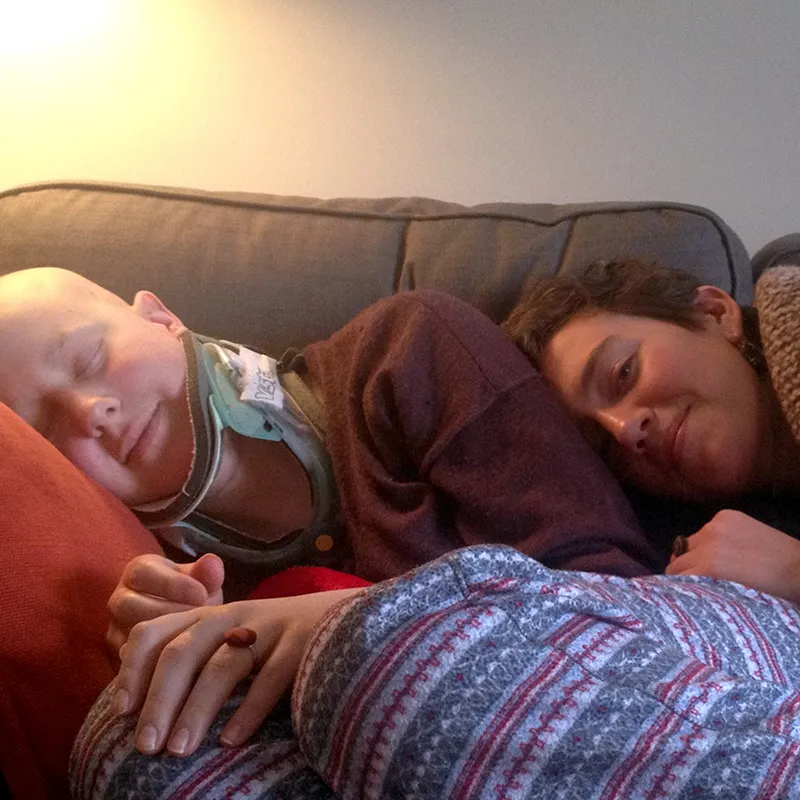
The isolation Michaela experienced was also very hard. Most of her friends were in their twenties and they couldn't fully understand what she was going through. “The only person I knew who could really relate to my experience was a friend who had already passed away from cancer,” she says.
In her darkest moments of depression, Michaela questioned if she could go on. What kept her going was a mixture of determination, her parents’ support, and a fierce will to keep fighting for the people who loved her.
“It was really grit,” she says. “I wanted to get better for my family.”
By the end of 2012, after months of treatment, Michaela got the news she had hoped for. She was in remission.
Years went by and life slowly returned to normal.
Then, nearly six years later, cancer returned.
Michaela, then 29, was thriving professionally and working in healthcare technology. She had recently finished her routine cancer follow-up care and was no longer undergoing regular scans.
She had a strange pain that developed in the middle of her back. Unlike a pulled muscle or minor injury, it just felt different.
"I just knew," she says. "It was the same intuition I had felt the first time."
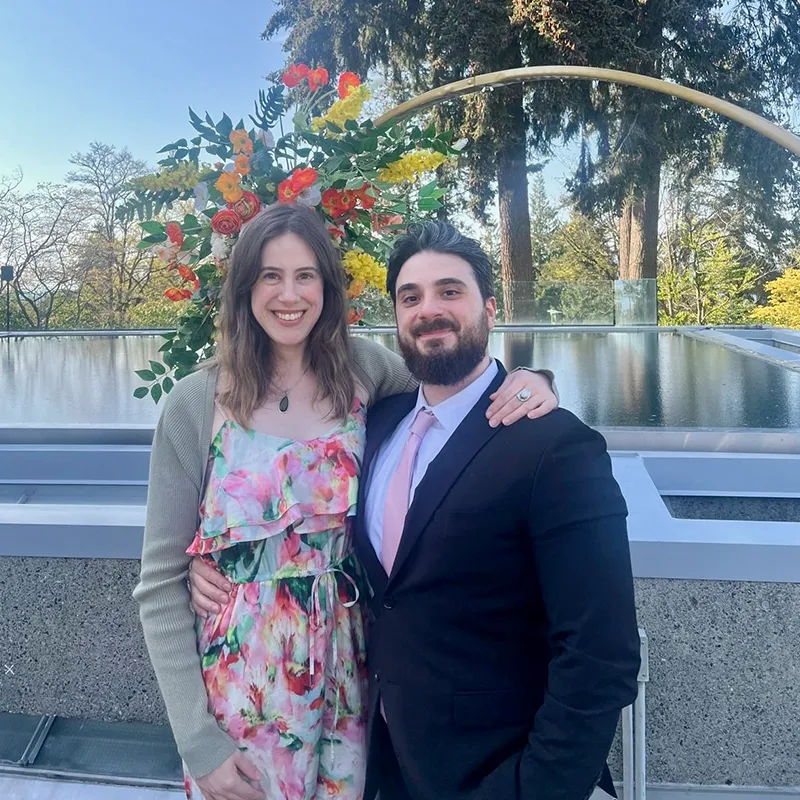
Michaela went back for some testing. These tests revealed news that she had always been worried about. The osteosarcoma spread to her lung, making it a stage 4 cancer diagnosis. In addition, doctors told her the tumor was wrapped around her aorta, something especially scary.
Faced with the possibility that her cancer had spread beyond what could be treated, Michaela was ready for the worst to come. She continued working while receiving treatment but decided to update her will just in case.
Remarkably, the chemotherapy worked. When surgeons operated, they discovered the scans had been misleading. The tumor did not involve the major blood vessel – the aorta – after all.
And with even more good news, there was only one tumor found.
Surgeons successfully removed the lower portion of her left lung, and the cancer was completely removed.
Looking back, Michaela describes the outcome as nothing short of extraordinary.
"There were so many things that had to align for me to still be here, I’m very lucky." She says.
Fourteen years after her original diagnosis, Michaela views life through a completely different lens.
Her experiences strengthened her relationships with her parents as well as strengthened her relationship with her faith and God. Michaela no longer takes time for granted and approaches each day with gratitude.
"Everything feels like a bonus," she says. "Nothing is guaranteed."
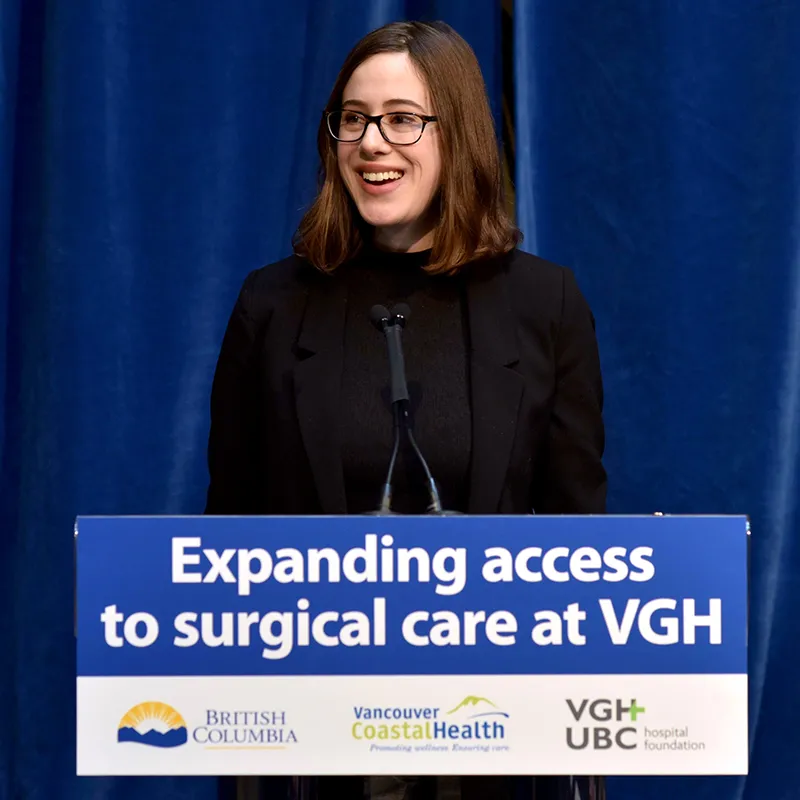
After years of serving as a patient partner and advocate within Canada's healthcare system, Michaela felt compelled to support others facing cancer and to give back. She searched for opportunities to mentor people diagnosed with osteosarcoma but found few options due to the rarity of the disease.
Eventually, she discovered Cancer Hope Network.
Michaela realized that her experience navigating a rare cancer diagnosis as a young adult could provide hope and support to others facing similar challenges, which inspired her to apply to become a CHN Peer Mentor. After being accepted into the program, she completed specialized mentor training to equip her with the skills needed to guide and support others on their cancer journeys.
Since joining Cancer Hope Network, Michaela has connected with several individuals facing sarcoma diagnoses. Her connection with these individuals offers them something she previously wished she had herself, someone who truly understands.
"While I was going through treatment, it would have made such a difference knowing that someone else was out there, someone who could relate to what I was going through."
As a Peer Mentor, Michaela knows she cannot erase another person's fear or uncertainty. What she can offer is empathy and new perspective.
Through her efforts with Cancer Hope Network, Michaela is helping ensure that others facing cancer have access to someone with shared experiences. By sharing her story and walking alongside others, she continues to transform some of life's most difficult experiences into a source of comfort and encouragement.
For Michaela, surviving is about more than beating cancer. It is about using every extra day, every unexpected blessing, and every lesson learned to help someone else find hope when they need it most.