
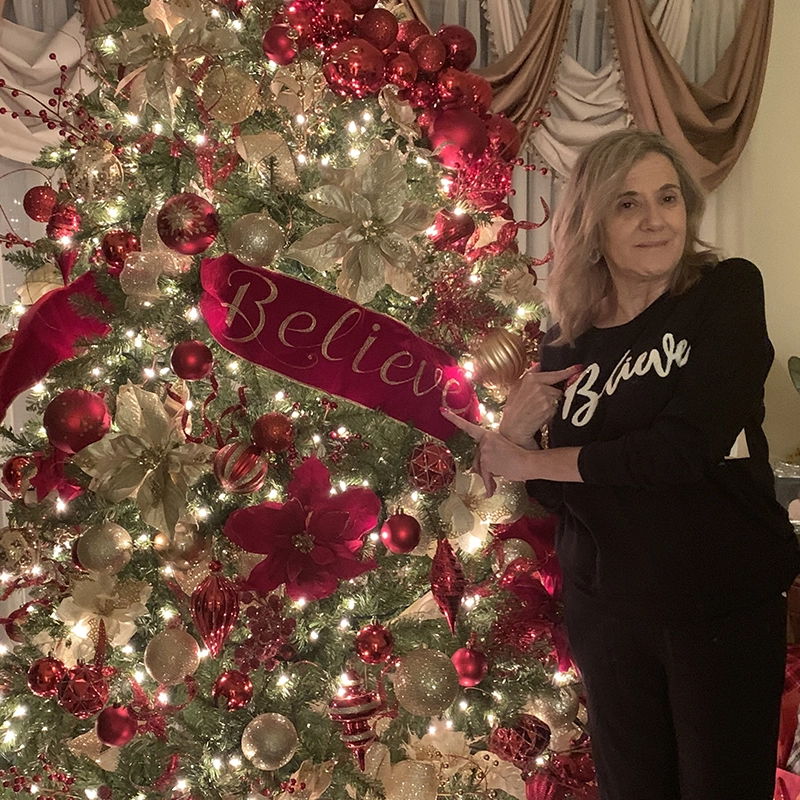
When Monica Binciguerra moved from Argentina to the United States in 1990, she brought with her a psychology degree and a deep understanding of the human spirit. By 1995, she had built a successful career in the mortgage industry and was focused on work, family, and building her life in a new country.
After returning from a trip to Europe in October 2018, Monica began noticing subtle changes — she experienced drop foot and stumbled while walking on several occasions, but brushed it off as fatigue from traveling. Her primary care physician found nothing alarming. Even after a small car accident where she briefly lost consciousness, she didn’t suspect anything serious.
Then, one day at work, she suddenly felt unwell — and lost consciousness again. She was rushed to the hospital where she underwent a CT scan, with the healthcare professionals all proceeding with the premise she must have had a stroke.
An MRI revealed two brain tumors, both malignant. Further testing confirmed the diagnosis: metastatic lung cancer: a primary malignant lung cancer that subsequently spread to the brain. Within days, she underwent brain surgery — a craniectomy — to remove the tumor at the back of the brain, located in the occipital lobe. However, the parietal lobe tumor was considered inoperable as it would have impacted her mobility and ultimately was treated with Gamma Knife surgery. After only three days in the hospital, she was discharged and waited for the biopsy results while recovering at home.
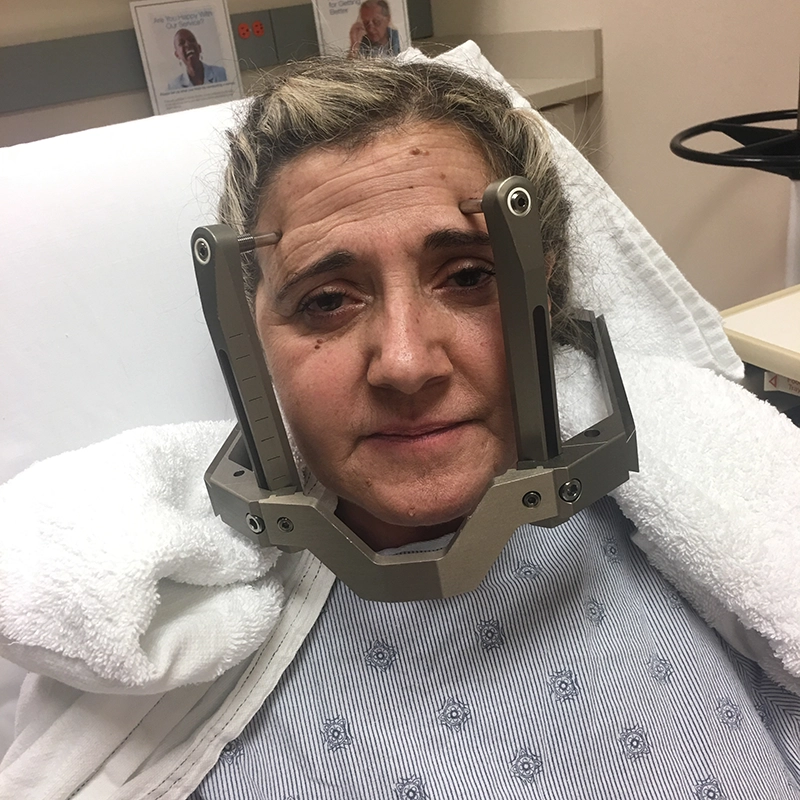
The result was stage 4 lung cancer. Her oncologist delivered the devastating news: she was given six months to live. She was 53 years old.
She immediately started chemotherapy and reported that miraculously she experienced no symptoms of nausea. She began taking steroids to reduce the brain swelling and radiation for the lung nodule.
Refusing a “Death Sentence”
Many would have felt defeated. Monica felt determined. “I wasn’t going to accept the death sentence,” she recalls. Drawing on her background in psychology, she understood the power of mindset. She made a conscious decision to approach treatment with resilience and hope. Month by month, she persevered. She surpassed the six-month prognosis — and then continued surpassing expectations.
In October 2019, a scan delivered extraordinary news: she no longer needed treatment.
The Power of Support
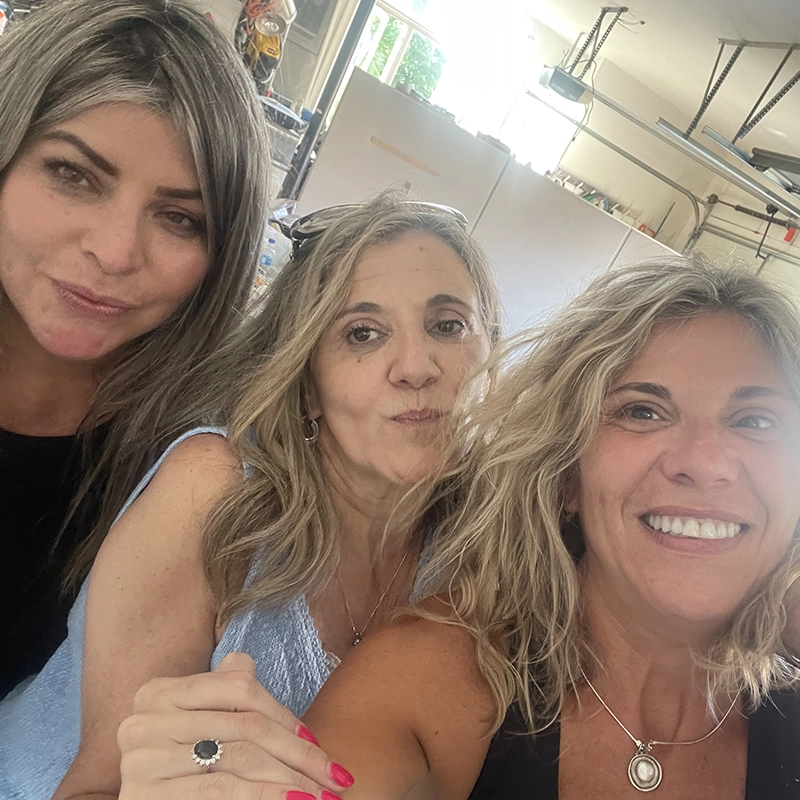
Monica is quick to credit the people who stood beside her during her journey — especially her best friend, Carmen, who showed up every single day. “She was there for everything,” Monica says.
Later, when Carmen’s brother faced his own cancer diagnosis, Monica was able to pay that love forward — supporting him the way Carmen had supported her. Her experience reinforced something she now shares often: cancer doesn’t just affect the diagnosed person. It affects everyone around them. Learning how to navigate those relationships — and helping others do the same — became central to her mission.
Turning Survival Into Service
After completing treatment, Monica felt a strong desire to give back. With the encouragement of her therapist, she began searching for ways to support others facing cancer. That search led her to Cancer Hope Network, a national nonprofit that connects cancer patients and caregivers with trained survivor mentors.
She became a volunteer mentor and, to date, has supported between 15 to 20 cancer patients through one-on-one peer conversations grounded in empathy, cultural understanding, and lived experience.
Her advice to those she mentors is simple, but powerful:
- “Validate what you need for yourself — not what others need, but what you need.”
- “Go through treatment with hope and dignity.”
- “Don’t victimize yourself.”
She understands the fear. The uncertainty. The anger and anxiety. And she helps others move through those emotions without being consumed by them.
Advocating for the Latino Cancer Community

As a Latina immigrant and metastatic lung cancer survivor, Monica is passionate about addressing disparities in cancer care. In February 2026, she attended the Advancing Cancer Research for Latinos and All Populations Conference, where she lent her voice to conversations focused on equity in cancer care. While there, Monica participated in Latino Cancer Patient Advocacy Training, strengthening her ability to advocate for patients and families navigating complex medical systems.
Her advocacy focuses on critical issues impacting the Latino community, including:
- Representation in research and clinical trials
- Access to timely and advanced treatment
- Overcoming cultural and language barriers during care
- Education around metastatic cancer and the importance of early detection
Her voice — shaped by survival, education, and lived experience — brings authenticity and urgency to these conversations.
More Than a Survivor
Monica is more than a survivor. She is a mentor, an advocate, a friend, and someone who still finds joy in everyday creativity — including baking cakes from home, simply for the love of it.
Cancer changed her life. But it did not define it.
