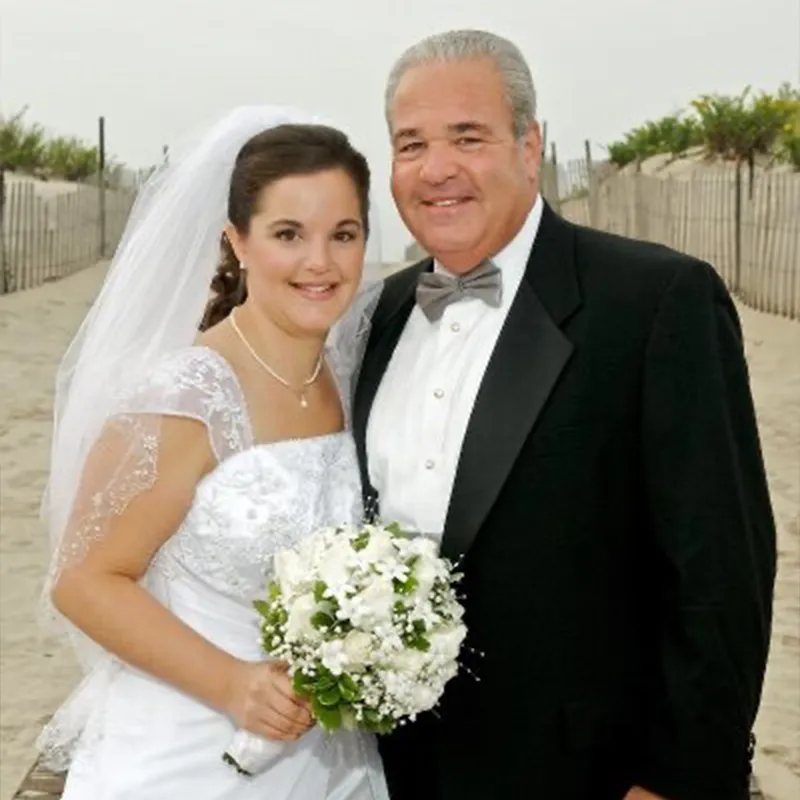
When Erica’s father was diagnosed with Cholangiocarcinoma in 2012—a rare and aggressive bile duct cancer—her world shifted. She was just 29 years old, balancing the demands of a growing family with a career supporting oncology patients at Memorial Sloan Kettering Cancer Center. Having worked with terminally ill patients and their families, she understood all too well what her father’s diagnosis meant.
“I knew from the beginning that it was terminal,” Erica recalls. “So, I became the communicator for my family—the one who translated the medical information and tried to prepare everyone for what was coming.”
At the time, Erica’s daughter was just one year old, and she was six months pregnant with her son. She made a point not to use the word “sick” around her children, choosing instead to teach them about death, grief, and compassion through books designed for young readers.
In February of 2015, her dad’s health declined rapidly. Amid the chaos, Erica found comfort in laughter and lightheartedness. “That’s just who I am,” she says. “Even when things were hard, we’d share videos of my kids with my dad or make jokes. It was a way to remind ourselves that life was still happening, even in the face of cancer.”
Her father passed away in 2015, just two weeks before Erica’s 32nd birthday. “He told me I’d been invaluable throughout it all,” she says softly. “Those words still guide me.”
A Family Touched by Cancer
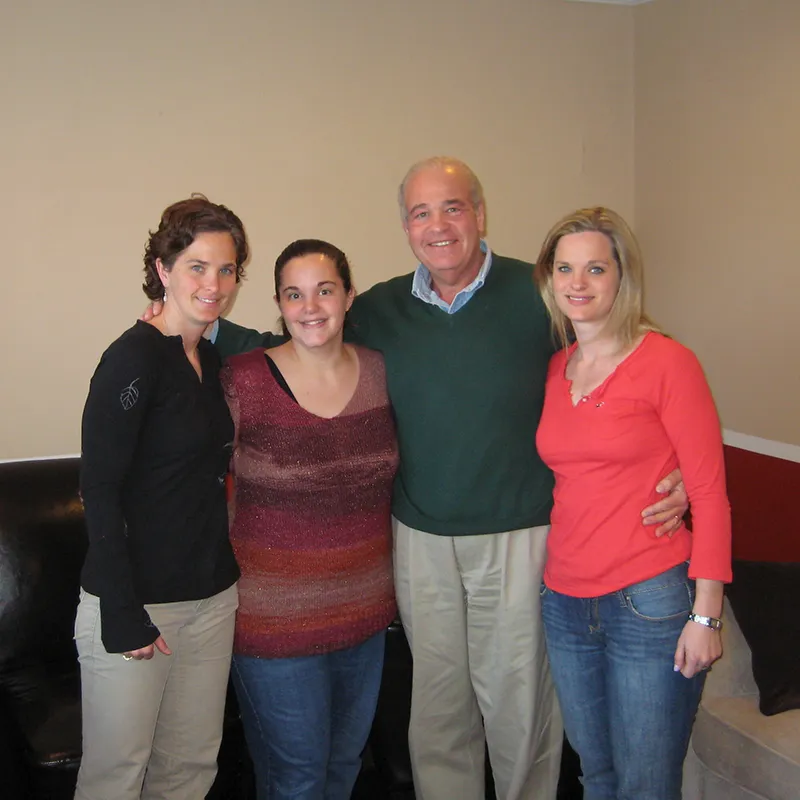
Erica’s experience with cancer didn’t stop there. In 2018, her sister Lindsay—her best friend and closest confidant—suffered a sudden seizure while home with her nearly three-year-old daughter. “My brother-in-law called me on September 11 to say Lindsay was on the floor and EMS was on the way,” Erica recalls. “She was being rushed to the hospital, and I just had this gut feeling it was cancer.”
Lindsay and Erica hadn’t always been close. “She’s four and a half years older than me, and as kids we never got along—like most sisters,” Erica laughs. “But once she went to college, we became inseparable. We even lived together while I was in grad school. She was my maid of honor, and besides my husband and me, she was the first to hold my daughter when she was born. We were thick as thieves.”
The next day, doctors confirmed Erica’s fear: Lindsay had oligodendroglioma, a type of brain cancer Erica had never heard of. “It was terrifying,” she says. “But almost instinctively, I stepped back into that familiar role—the communicator and translator for my family. It’s where I fit.”
Caretaking from a Distance
Unlike when her father was ill, Erica’s caregiving for Lindsay was less hands-on and more emotional and informational. “My primary role was interpreting medical information, helping to come up with questions, and being emotionally supportive,” she explains. “I couldn’t physically be in New Jersey as often because my kids were six and five at the time and my husband worked full-time. But I was always present—through calls, FaceTime, and every major appointment.”
This long-distance caregiving brought its own challenges. “Every time my phone rang, my heart would drop,” she says. “There was so much anxiety—not just about Lindsay’s health, but about how to balance being a mom and a sister and a daughter all at once.”
Emotionally, this experience felt different from losing her father. “When my dad was sick, it was heartbreaking, but losing a parent is part of life,” Erica reflects. “With Lindsay, it was confusing and unfair. She was just shy of 40 when she had her first surgery and had to celebrate her birthday in an inpatient rehab, learning to walk and talk again. It didn’t make sense.”
The stress eventually took a toll. “I started experiencing my own health anxiety and had to go on anti-anxiety medication,” she says. “There’s this family history, and now one more piece that made me feel like a ticking time bomb. But I was lucky to have an incredible support system—my husband and mother-in-law were always ready to pick up the slack at home when I needed to be there.”
The Strength of Family and Hope
Throughout it all, Lindsay’s resilience shone through. “Her biggest strength was her daughter, Renata,” Erica says. “She needed to be there for her—to watch her grow up. My brother-in-law, Fabio, and my mom were also amazing, stepping in however they could.”
One memory stands out vividly. “It was early October 2018, just weeks after her surgery,” Erica recalls. “Lindsay came home from rehab for her daughter’s third birthday party. It was small—just family—but seeing her walking, talking, and laughing again was everything. They may have taken a quarter of her brain, but they didn’t take her essence. She was still my sister.”
Lindsay’s fight continued through the pandemic, when she had to undergo a second craniotomy. “Because of COVID, she was discharged within 24 hours, and none of us could visit her,” Erica says. “She had to be so strong, facing it all in isolation. That kind of courage leaves an imprint.”
From Caregiver to Peer Mentor
Erica’s personal and professional experience paired with her master’s degree in counseling from The College of New Jersey—deepened her understanding of what it means to care for others. “Cancer doesn’t just happen to the person with the diagnosis,” she says. “Your whole family gets cancer. The patient is at the center, but everyone around them is affected.”
Her connection to Cancer Hope Network (CHN) began years earlier, when her father had received support through the organization. Lindsay eventually became a CHN mentor herself, and in 2024, Erica followed in her footsteps. “Recognizing how valuable it would’ve been to have third-party support from someone who understood what I was going through—that’s what drew me to become a volunteer,” she explains.
The Power of Peer Connection
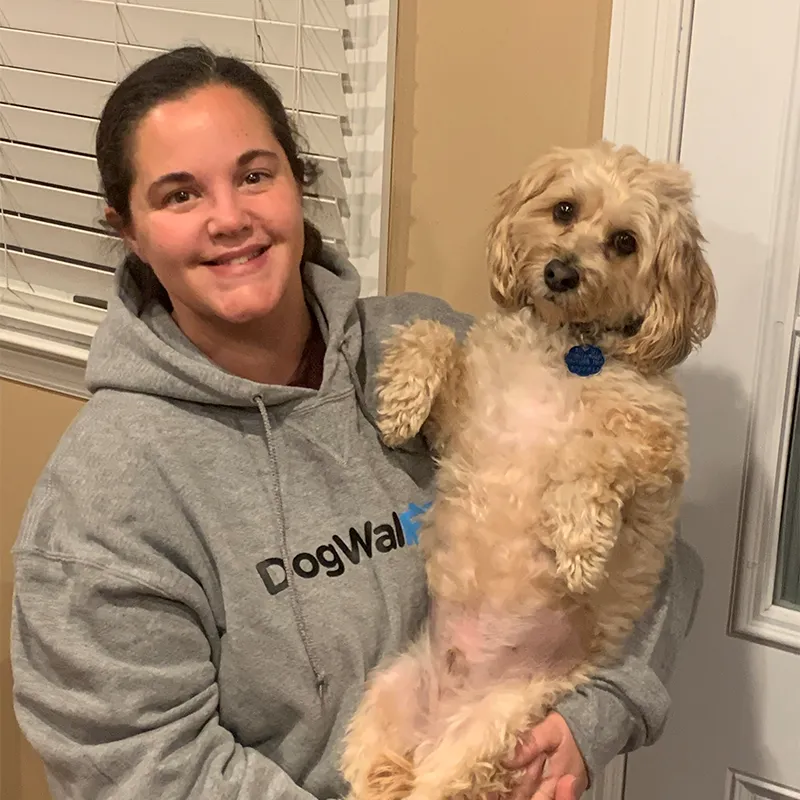
Today, Erica lives in Levittown, New York, where she runs a dog walking and pet sitting business—a peaceful counterbalance to the emotional intensity of her caregiving past. Through CHN, she has mentored half a dozen caregivers from around the country, helping them navigate the complex emotions of supporting a loved one with cancer.
“Having a third party who understands, but isn’t part of your family, makes a huge difference,” she says. “You can talk openly about your fears and frustrations—the things you can’t say at home.”
One of her mentees has even become a close friend. “We met in person this September,” Erica shares. “She told me she hears the Holy Spirit through me. It’s those moments that remind me why I do this.”
Honoring Caregivers Everywhere
As National Family Caregivers Month approaches, Erica reflects on what caregiving means to her. “There’s not enough space for the caregiver’s experience,” she says. “It can feel so lonely. But if I can make one person feel less alone—just one—that’s everything.”
Her advice to other caregivers?
“Remember that people are people, regardless of their diagnosis. Cancer doesn’t erase who they are. Listen, be present, and offer a judgment-free space. Sometimes that’s all someone really needs.”